Skip to content

OTTODISANPIETRO

Get our app ✨

Download

Cart

  Select your gift wrapping
Liquid error (sections/cart-drawer line 192): product form must be given a product

The Complete History Of The Women's Skirt

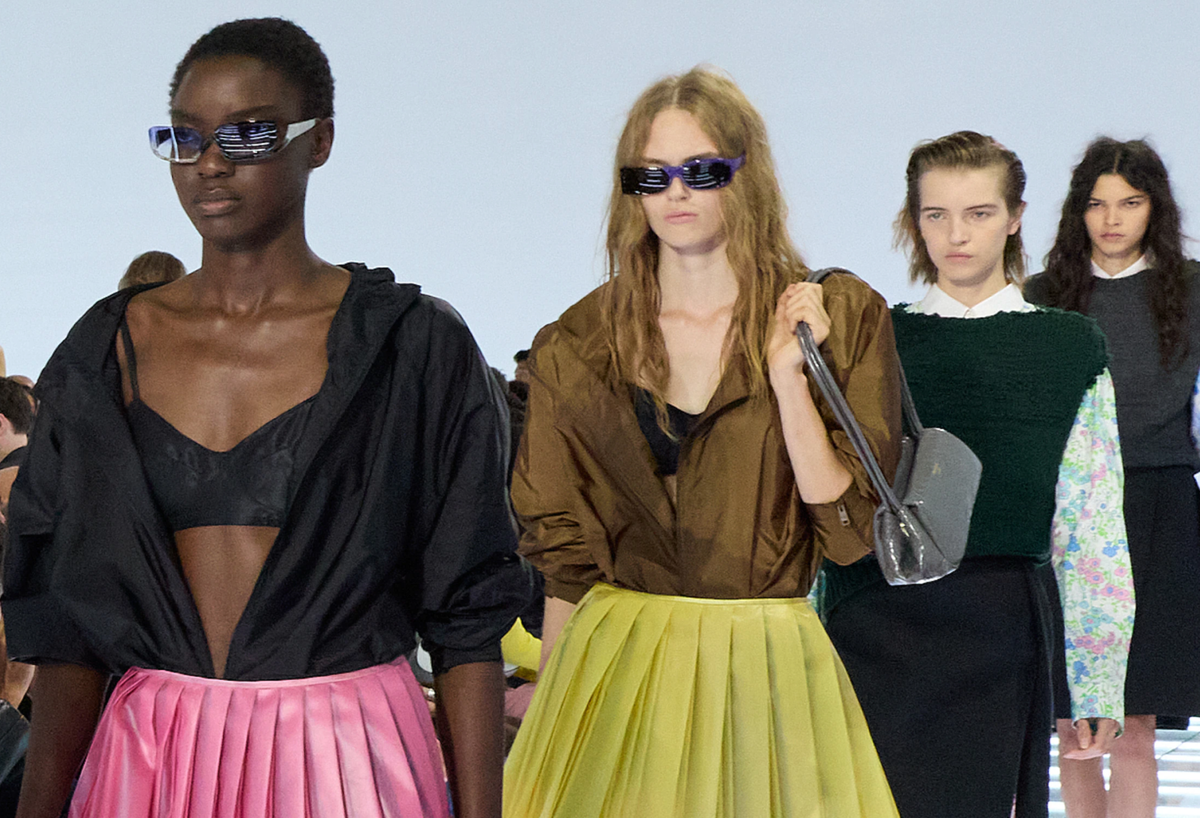
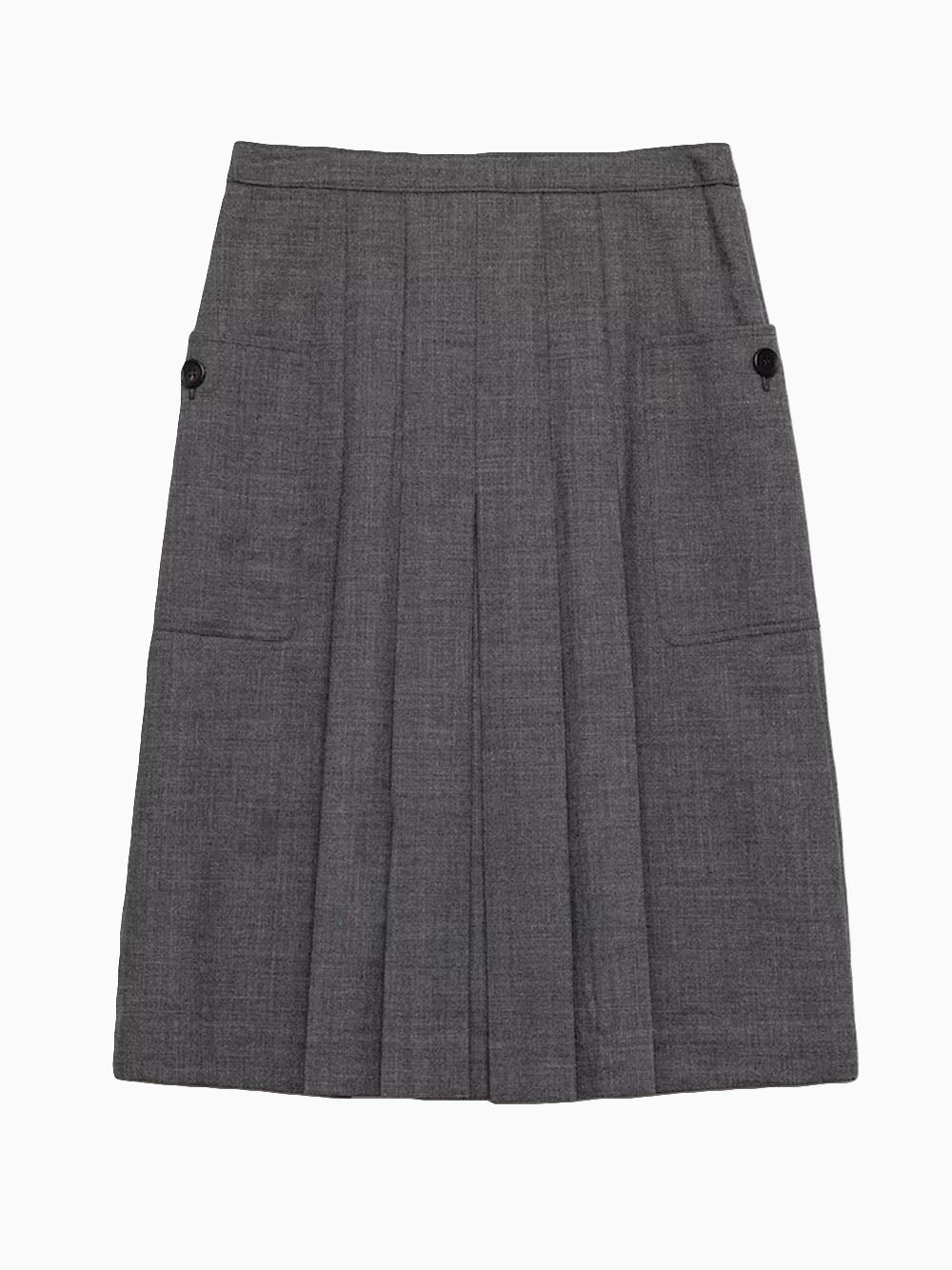
This week in Milan, Miuccia Prada and Raf Simons presented their spring/summer 2027 collection: sixty-three looks built around a skirt. The skirt, and all its variations, as an object of study, as the most representative item of the Prada archetype (a top, a pleated flared skirt and low pumps).

The show notes put it this way: “the skirt is a Prada obsession, at once independent from and dependent on the clothes that surround it, its definitive graphic silhouette, linear and modernist, offering the one fixed parameter for the projection of ideas.”

But how did the garment that today shapes one of the world's most important houses come to be? Inspired by Miuccia, in this blog post we bring you a full story (kept as brief as possible) about the skirt. The skirt as a historical, political and feminist object.

If you have any questions or feedback on topics you'd like to see covered on the blog, get in touch with us via Instagram, email or WhatsApp.

The Complete History Of The Women's Skirt

From Sumer to the Suffragettes

The skirt has existed since before the concept of fashion itself, making it the oldest garment on record. A straw-woven skirt dated to around 3900 BC was discovered in the Areni-1 cave in Armenia, and remains the oldest surviving physical example of the garment. Even earlier, figurines from the Vinča culture, found across present-day Serbia and the Balkans between 5700 and 4500 BC, already depicted female figures wearing skirt-like garments. In its origins, the skirt was neither feminine nor masculine, it simply served as the simplest, most economical solution for covering the lower body.

In Mesopotamia, the Sumerians wore a garment called the kaunakes, a skirt of skin or woven fabric made to imitate sheep's fleece, worn by men and women alike. In Ancient Egypt, men wore the shendyt, a rectangular piece of linen wrapped around the waist, while women favoured long dresses or ankle-length tunics.

The length and quality of the fabric were markers of social status: the longer and finer the cloth, the higher the rank of the wearer. According to Kimberly Chrisman-Campbell, author of Skirts: Fashioning Modern Femininity in the Twentieth Century (St. Martin's Press), fabric was extremely expensive before the Industrial Revolution, so a larger skirt meant more cloth, and more cloth meant a greater display of wealth.

It was during the Middle Ages, in Western Europe, that the skirt began to become a specifically feminine garment. Advances in weaving and tailoring between the thirteenth and fifteenth centuries, such as the treadle loom and improved shears, made it easier to produce hose and trousers for men, which were then adopted as the norm.

From that point on, the skirt became associated with women. Between the seventeenth and eighteenth centuries, the volume of a women's skirt became a marker of class: hoops and paniers created the vast, wide silhouettes we now recognise.

The nineteenth century brought two simultaneous, contradictory movements. On one hand, Victorian fashion pushed the women's skirt to its highest point of technical complexity, with corsets, crinolines and bustles turning womenswear into something constrictive, limiting movement while quietly expressing woman's place in society at the same time.

It was here, too, that the first voices of resistance emerged. Tied to the first wave of the suffragist movement, in 1851 activist Elizabeth Smith Miller presented American editor Amelia Bloomer with a knee-length skirt worn over Turkish-style trousers. Bloomer promoted this new rebellion in her newspaper The Lily and named it after herself: bloomers, now a classic symbol of the woman who could finally cycle and walk freely.

The style was taken up by key figures of the era's feminist movement, including author and activist Elizabeth Cady Stanton, activist Susan B. Anthony, and abolitionist and suffragist speaker Lucy Stone. Bloomers were later rebranded as the "freedom dress".

In the final decade of the century, the rainy daisy skirt, its hem cut a few inches off the ground to avoid dragging through wet streets, paved the way for the increasingly shorter hemlines of the century to come.

The Miniskirt Revolution

But it is in the twentieth century that the women's skirt becomes a political instrument. In the 1920s, postwar prosperity brought with it the era's famous short hemlines and flapper silhouettes. Economist George Taylor observed in 1929 (a famous, though not widely recognised, data point) that the shortening of hemlines coincided with a boom in the stocking market, helping to shape what became known as the "hemline index". In other words, that skirt length served as an indicator of economic prosperity or crisis.

The theory found stronger academic backing nearly a century later: in 2010, Marjolein van Baardwijk and Philip Hans Franses of the Erasmus School of Economics analysed fashion magazine data and GDP figures between 1921 and 2009 and found a certain correlation, though with a lag of roughly three years relative to market swings.

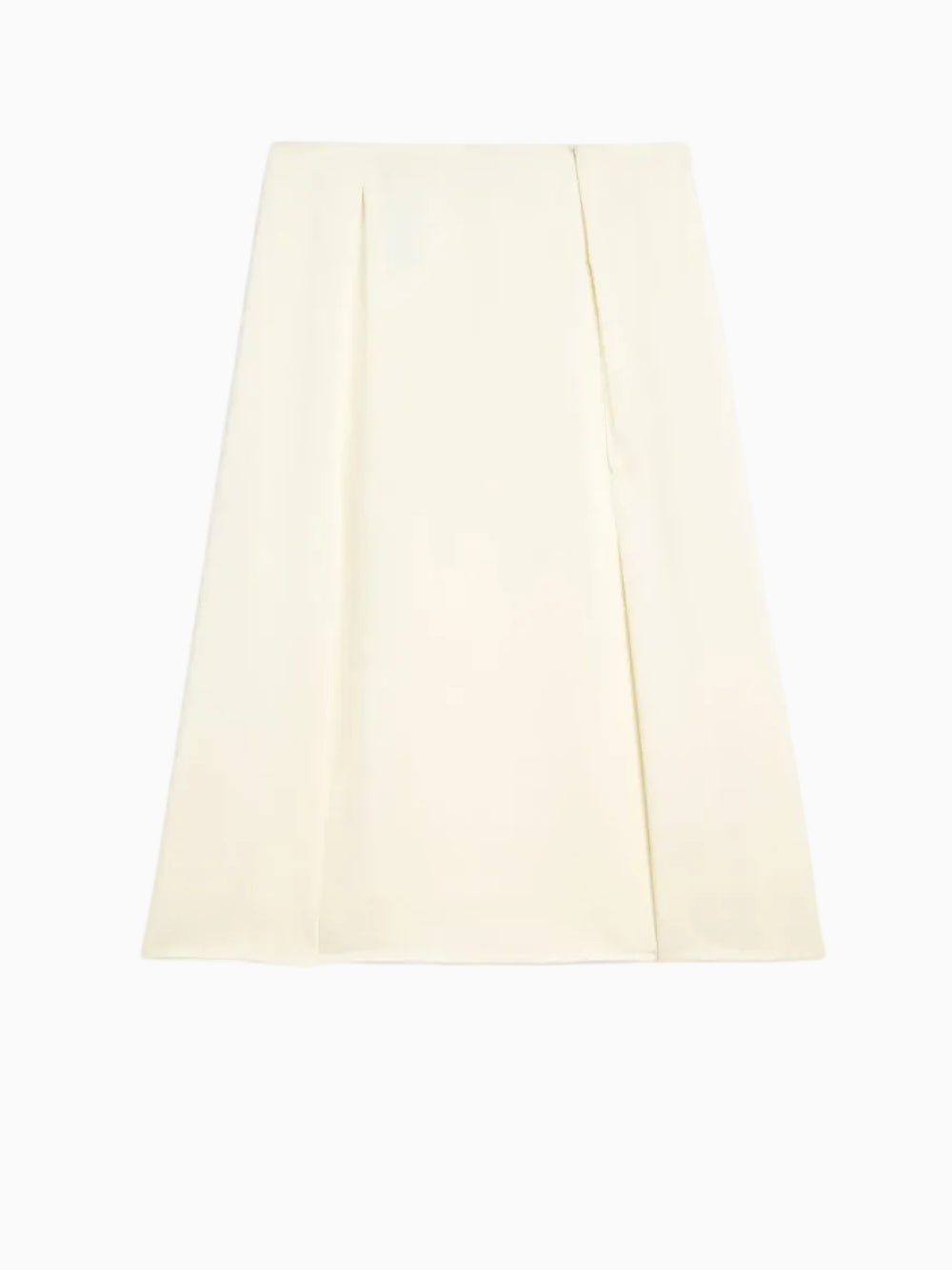
The Great Depression brought hemlines back down. In 1947, Christian Dior deliberately lengthened them again with his New Look: full, flared skirts with cinched waists and hems falling at calf length. In 1954, his H-line collection introduced the pencil skirt as we know it today: straight and fitted, elongating the leg and accentuating the hips. It was worn by Grace Kelly, Sophia Loren, Audrey Hepburn and Marilyn Monroe, each bringing an entirely different way of wearing the same piece.

The best-known moment in Europe would arrive in 1964 with Mary Quant's miniskirt. The English designer turned it into a landmark of the streets of Chelsea, naming it after her car (a Mini Cooper). Futurist designer André Courrèges presented a similar look that same year in Paris, and designer John Bates has also been credited as a possible precursor to the famous sixties doll silhouette.

The miniskirt made a political statement about the liberation of the female body, arriving alongside the second wave of historical feminism. Kimberly Chrisman-Campbell, author of Skirts: Fashioning Modern Femininity in the Twentieth Century (St. Martin's Press), notes that no one thought it was sexy at first: it made women look like little girls playing dress-up, and the miniskirt filled a real gap in the market, young women who had no interest in looking like their mothers.

Since then, no single length has ever held the field for long. The eighties brought the skirt back as a tool of power dressing, tied to women's growing presence in the workforce. The nineties made it a central object of minimalism, with figures like Jil Sander, before the miniskirt returned once more, driven by media phenomena such as the Spice Girls and Clueless.

Today, the range of silhouettes in circulation owes more to fashion's own cycles than to any rise and fall of the global market.

Join the conversation in our socials