Skip to content

OTTODISANPIETRO

Get our app ✨

Download

Cart

Your cart is empty

Select your gift wrapping
Liquid error (sections/cart-drawer line 192): product form must be given a product

The History Of The White T-Shirt

Layering, or the art of building outfits through multiple layers, has become one of the defining global trends. In a landscape saturated with options and opinions, one recommendation has spread through social algorithms with unusual speed: the white T-shirt as a visible canvas. Slightly peeking out beneath a polo, worn under dresses, or revealed at the neckline under knitwear, the trend moves fluidly from social media to the runway.

Far from being a new phenomenon, its association with quiet luxury hints at a deeper narrative. One shaped by power, luxury, and sensuality. Today, we explore that story on our blog.

The History Of The White T-Shirt

The origin and history of the white T-shirt

Many assume that images of the T-shirt as underwear in the 19th century, or as a device to enhance the allure of actors in the 20th century, define the origin of this garment. The reality is more complex. The history of the white T-shirt operates on a broader sociological level than the history of the T-shirt sui generis. From Egyptian white linens to Greco-Roman togas and the ornate ruffs of the Middle Ages, white textiles signified power and wealth.

Labour and sanitary conditions across these eras made it difficult to maintain any garment, especially a white one, in its original state. As a result, only specific segments of society could distinguish themselves through jewellery, weaponry, and, notably, the whiteness of their clothing. Iconographic and almost dreamlike representations of heroes and deities, often draped in flowing white fabrics, reinforced associations with earthly purity. In short, white was a tone both difficult to achieve and to preserve until relatively recent times.

The earliest form of the white T-shirt, as we understand it today, can be traced to T-shaped undergarments worn for centuries to separate the body from coarser fabrics, absorb sweat, and preserve a sense of decorum. White garments thus migrated inward, becoming part of intimacy and privacy. A modest, invisible layer, tied to ideas of purity, control, and morality.

With the industrialisation of cotton in the 19th century, and the expansion of mass production toward its end, the garment evolved. The older union suits worn beneath workwear gave way to lighter, more practical undershirts that were easier to wash. What is now a staple originated as a functional solution for physical labour. This is why sleeveless white T-shirts often appear alongside denim, both emerging as contemporaneous workwear garments.

In the early 20th century, the U.S. Navy adopted it as a standard-issue undergarment: white, cotton, breathable, and suited to warm climates. The T-shirt began circulating widely among workers, soldiers, and fathers, associated with a clean, classical masculinity. Or that was the intention. Inevitably, it also acquired an erotic charge: fitted to the torso, close to the skin. Still technically underwear, its visibility in public carried a subtle sense of exposed intimacy.

Photo: Jacob Elordi in Bottega Veneta's 'What Are Dreams?', photographed by Duane Michals

From underwear to a mainstream phenomenon

This is where the iconic images of Marlon Brando, Brigitte Bardot, and James Dean enter through cinema. In the 1950s, major Hollywood stars positioned the T-shirt as an object of desire. Brando, through his scenes in A Streetcar Named Desire by Tennessee Williams, turned the white T-shirt into the ultimate symbol of masculine eroticism, not without controversy.

James Dean, in contrast, infused it with the naïve and rebellious tone still associated with it today, wearing it as a garment that resisted the adult system. In Saint-Tropez, Bardot was photographed in 1958 in one of her most defining portraits: fitted in a white top, paired with shorts and a belt. The image circulated globally, cementing her status as a symbol of modern media-driven sensuality. This trajectory continued with Jane Birkin, whose white T-shirt portraits in the 1970s reinforced its cultural weight. It was a different era.

The white T-shirt gradually absorbed layered meanings, precisely because of its nature as a blank canvas. From Bardot, Birkin, and Brando, to the rebellious codes of Bruce Springsteen and the grunge aesthetic of Kurt Cobain. By the 1990s, the white T-shirt had become foundational within the fashion system. Minimalism formalized its role as a core wardrobe element.

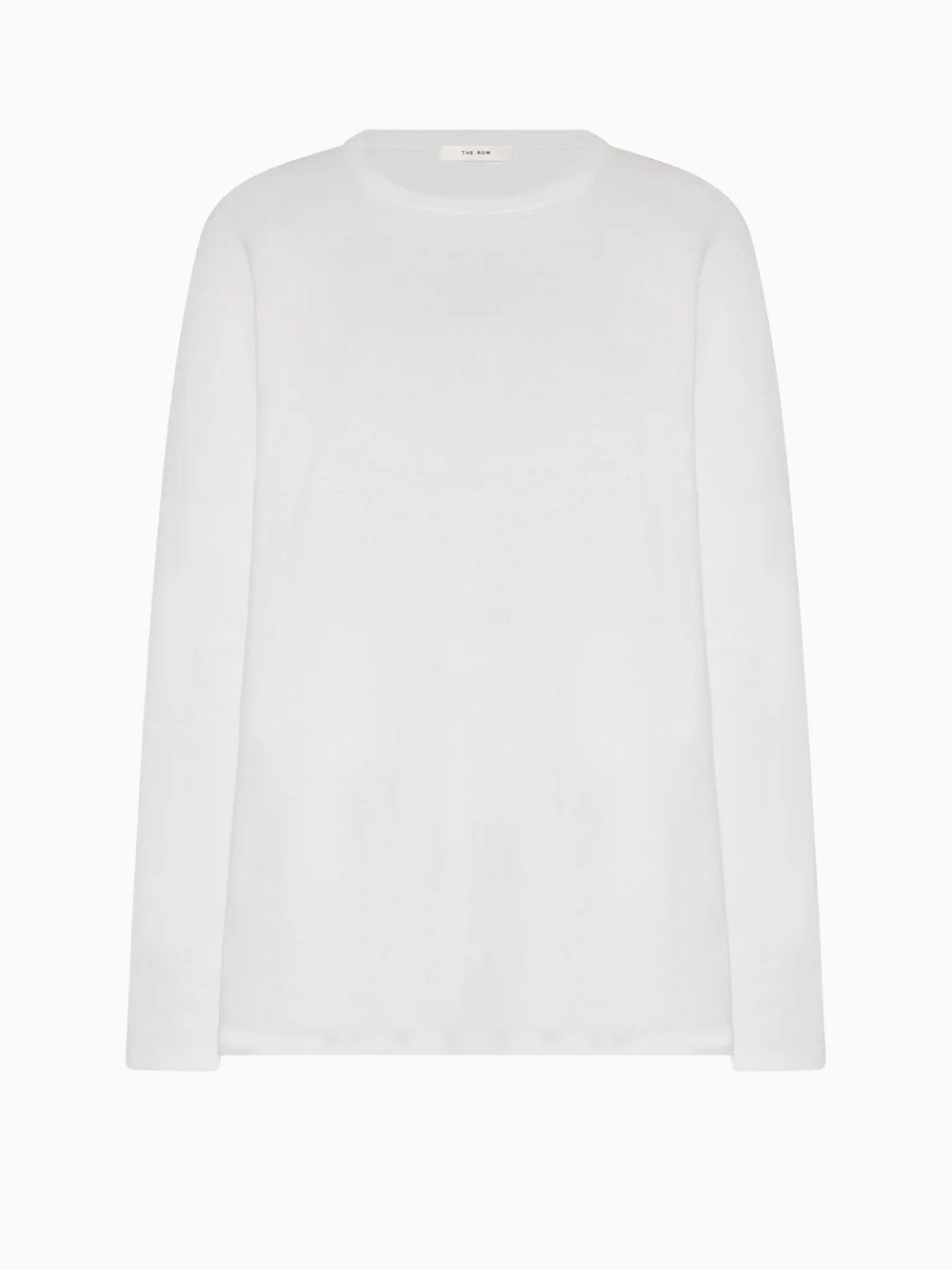
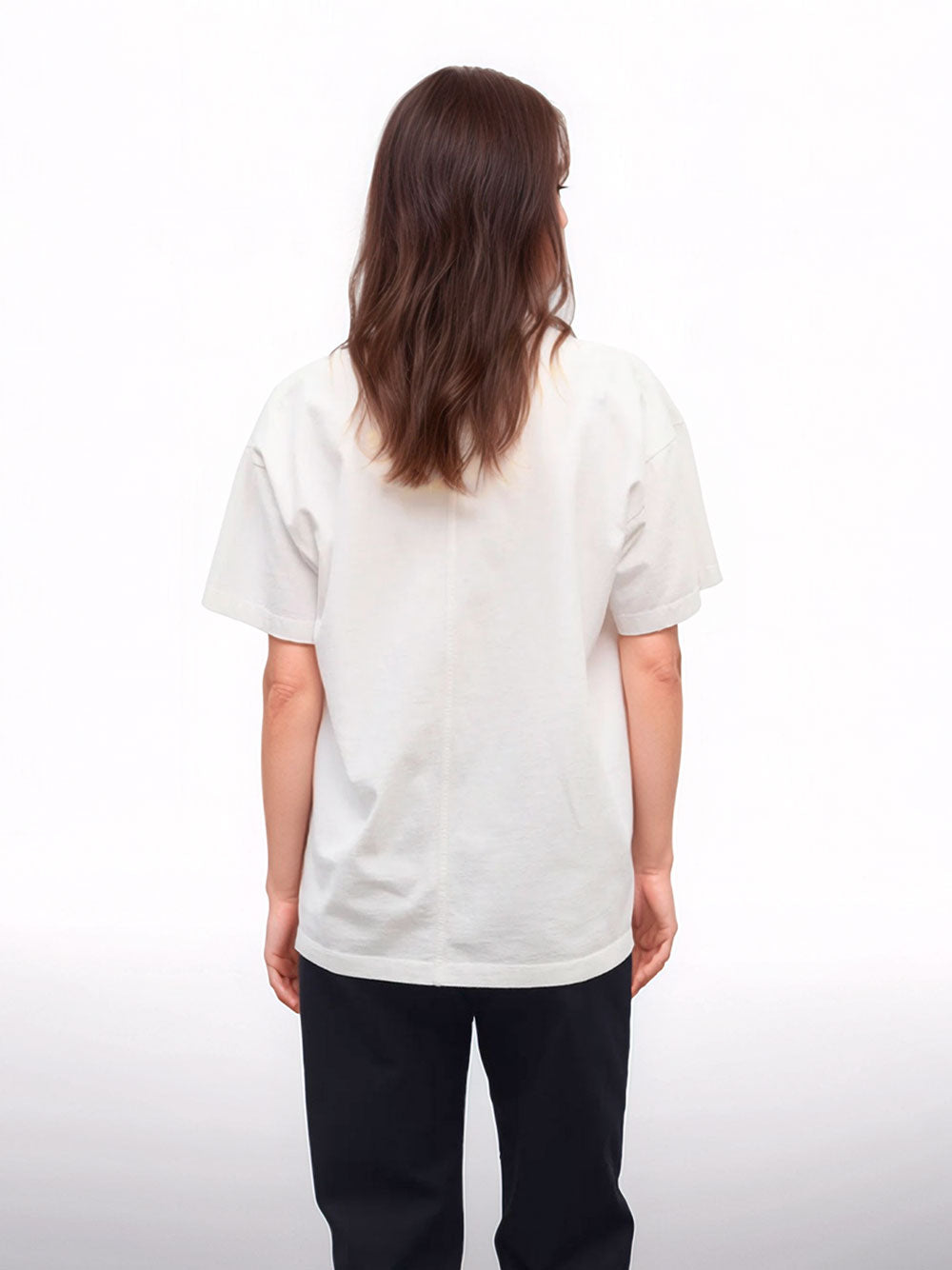
In the 2000s, the T-shirt reduced its proportions further to align with prevailing trends. Yet, across each transformation, something remained unresolved. Until 2006, when The Row established it as a foundational piece of the brand. For Mary-Kate Olsen and Ashley Olsen, figures closely tied to contemporary luxury, the perfect white T-shirt did not exist. One capable of standing alongside the designer garments they collected. The question extended beyond color or minimalism. The Row refined proportion, cotton weight, drape, neckline precision, and sleeve length. This led to pieces defined by a vertical back seam, subtly altering the structure of the garment.

For Amy Smilovic, founder of Tibi, the white T-shirt sits at the core of her philosophy of Creative Pragmatism. It belongs to the category of WOFs, or Without Fails: garments that anchor a wardrobe and resolve daily dressing with clarity. Tibi approaches the T-shirt as an exploratory piece, capable of standing independently through minimal adjustments in form and function.

Today, the white T-shirt has returned to the center of the conversation, driven by the resurgence of minimalism. It exists between early-2000s references, sportswear codes, and a new wave of contemporary conceptualism.

Shop the look

Shop the look

Floris t-shirtFloris t-shirtFloris t-shirt
Sale price970 €
Lavinia t-shirtLavinia t-shirtLavinia t-shirtLavinia t-shirtLavinia t-shirt
Sale price640 €
Florie topFlorie top
Sale price490 €
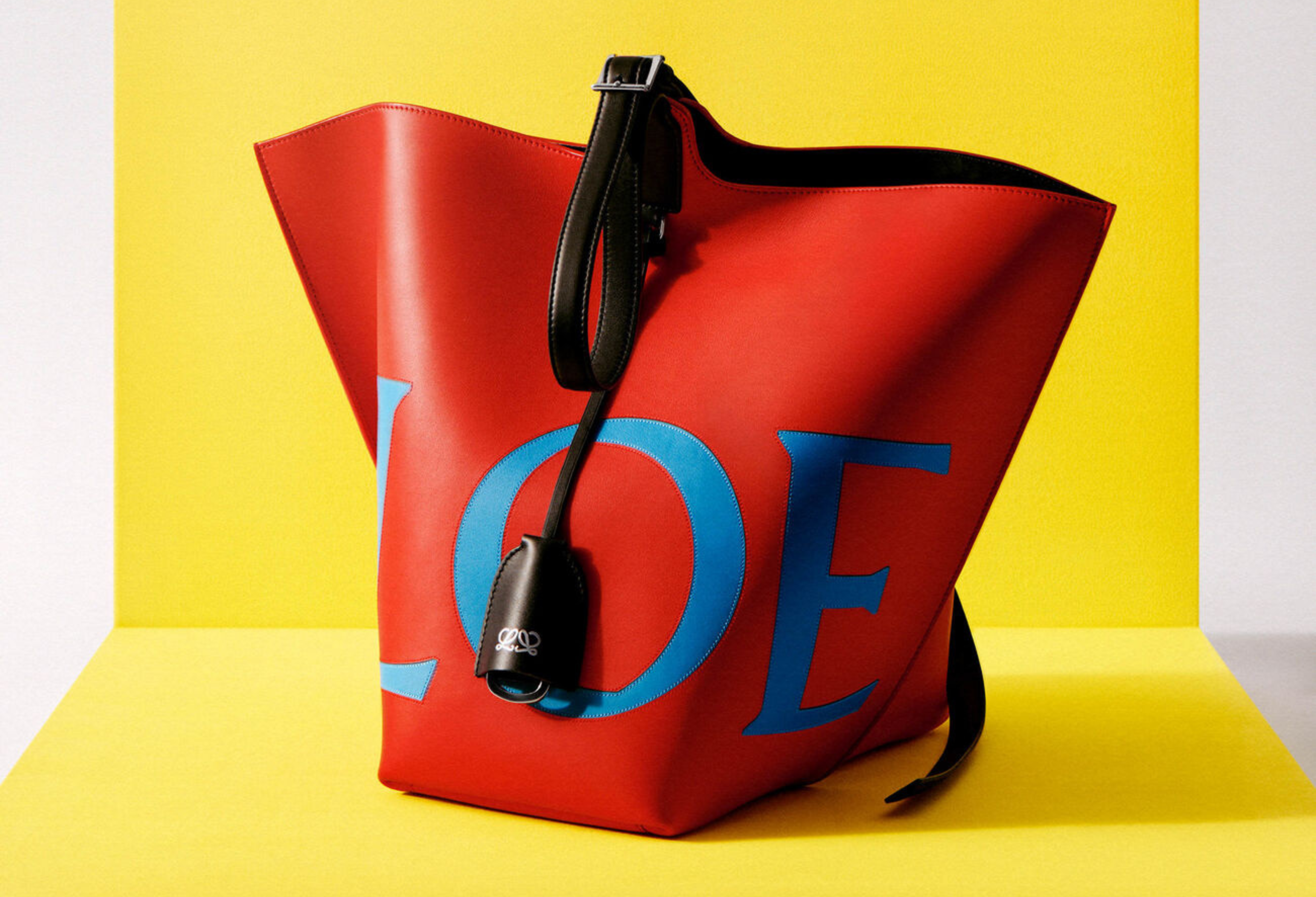
Barn tote bagBarn tote bagBarn tote bagBarn tote bag
Sale price1.680 €
Floris t-shirtFloris t-shirtFloris t-shirt
Sale price970 €
Lavinia t-shirtLavinia t-shirtLavinia t-shirtLavinia t-shirtLavinia t-shirt
Sale price640 €
Florie topFlorie top
Sale price490 €
Barn tote bagBarn tote bagBarn tote bagBarn tote bag
Sale price1.680 €
View product
Join the conversation in our socials