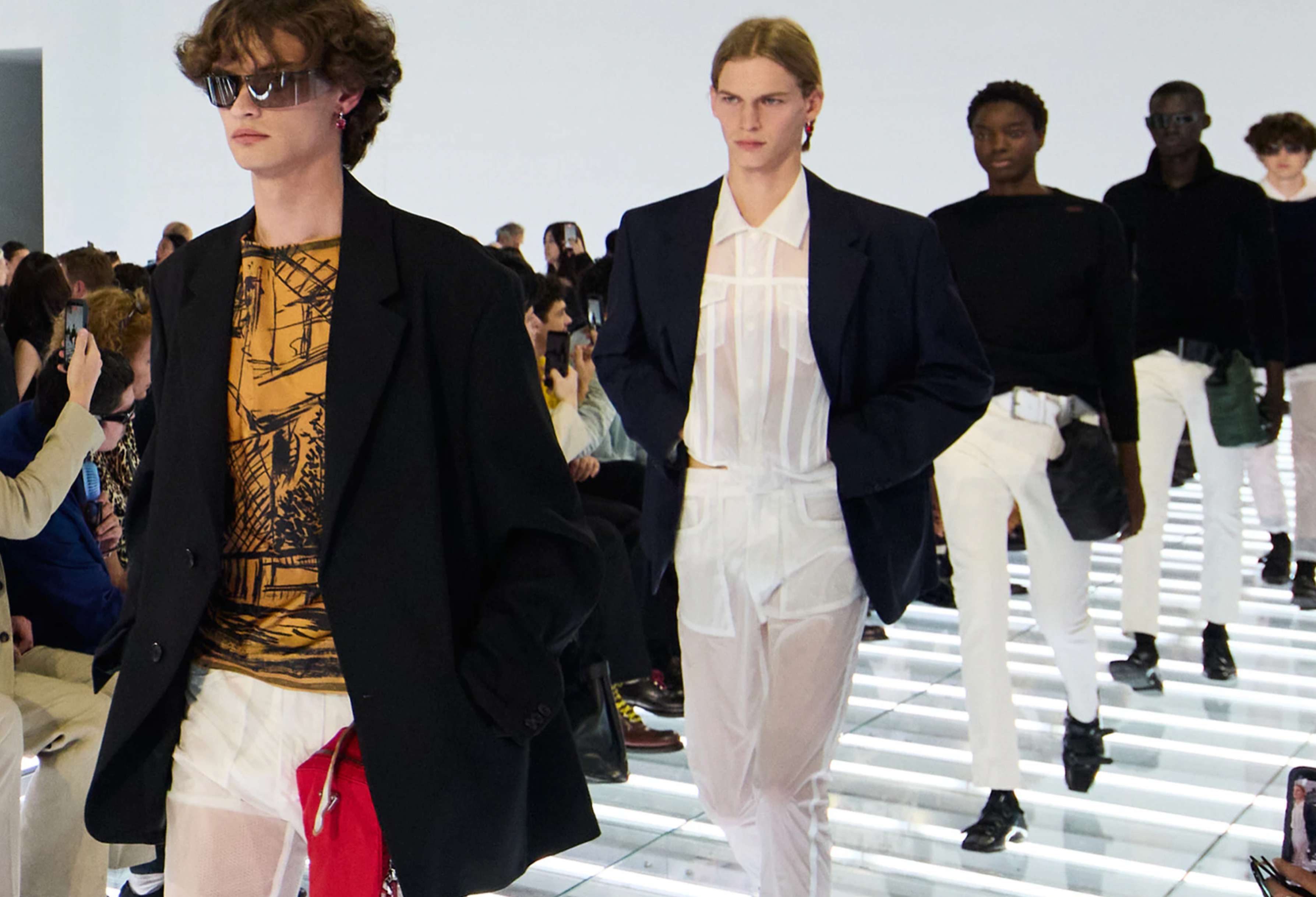
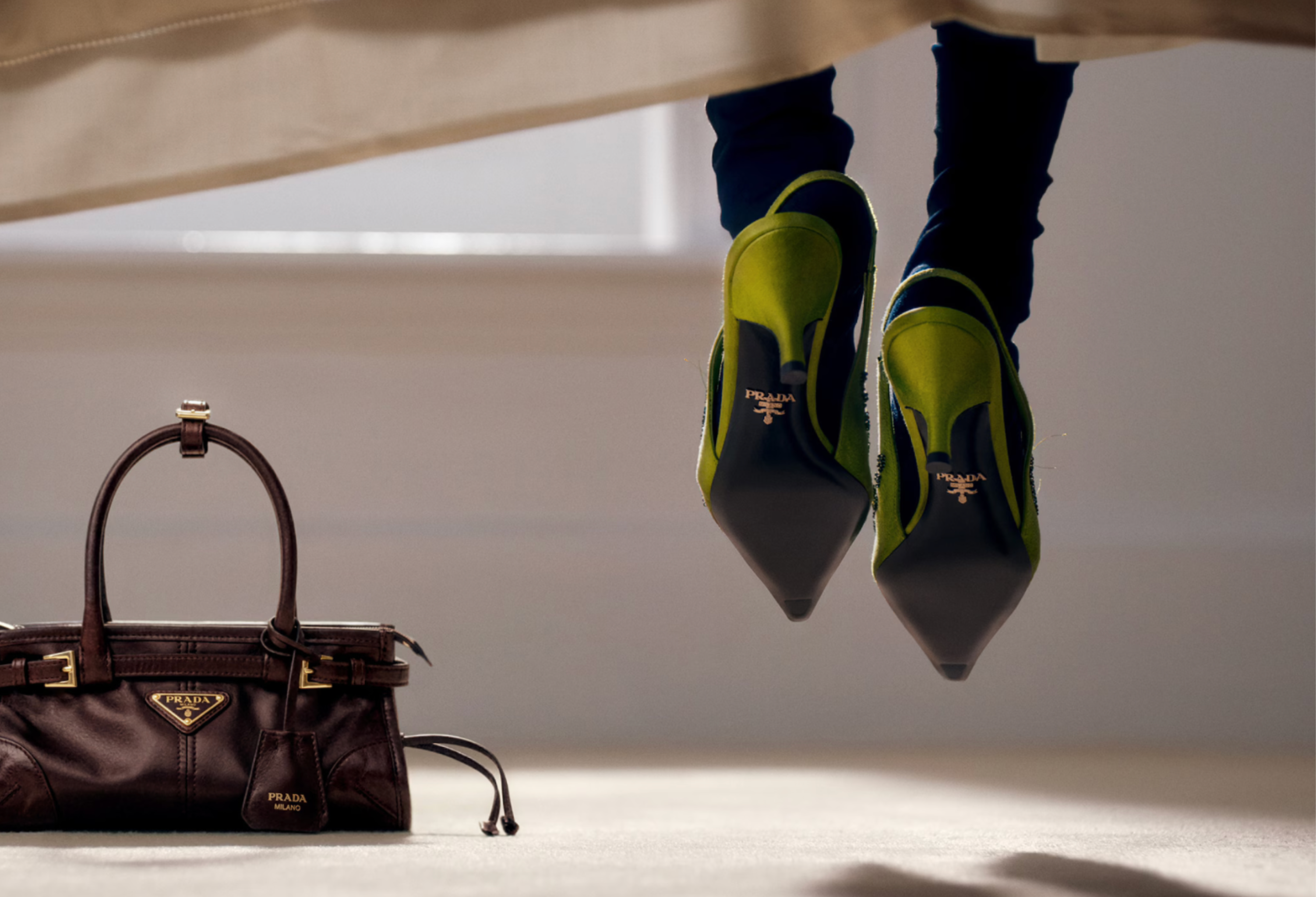
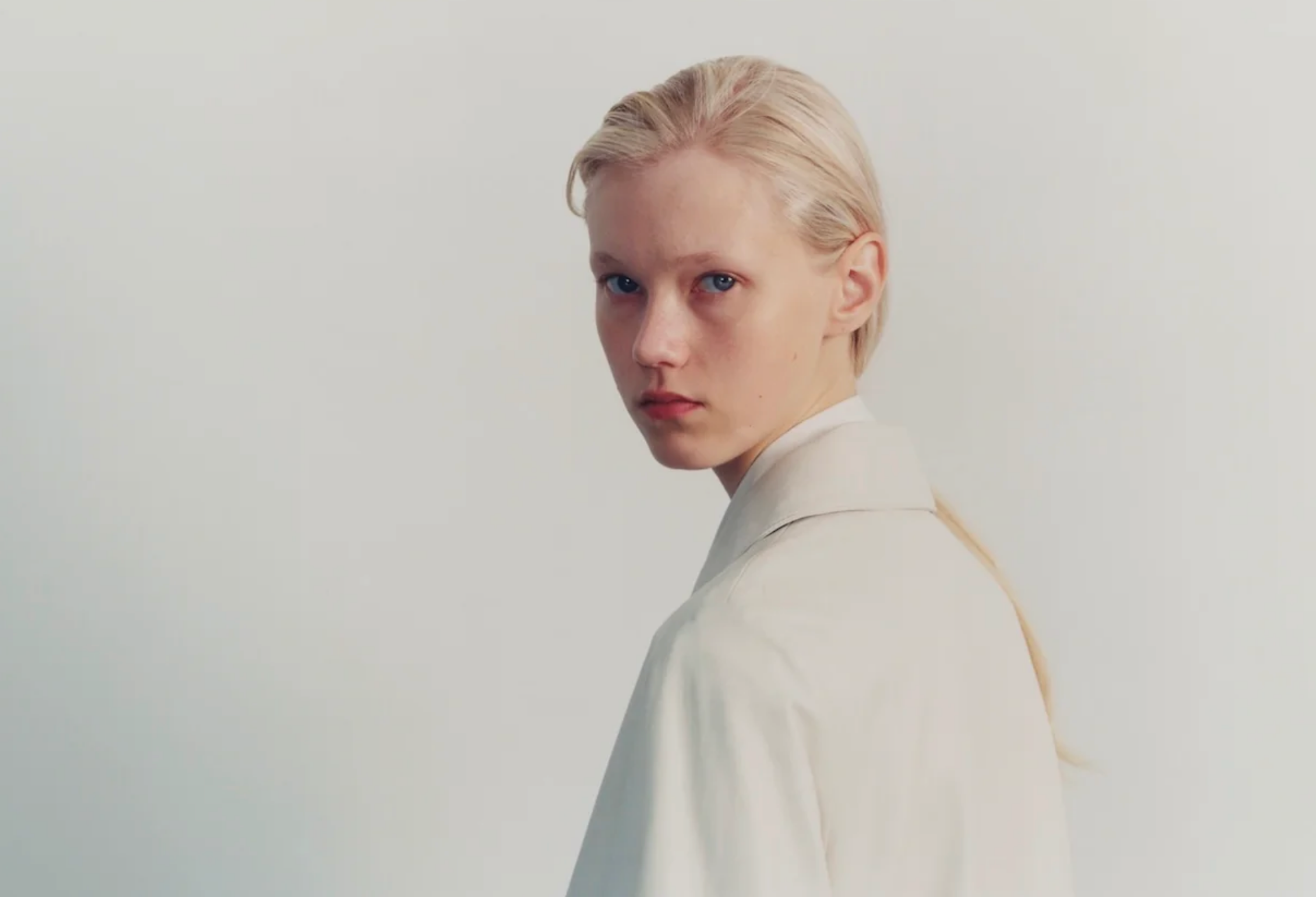
For decades, Miuccia Prada has demonstrated that complexity does not necessarily require greater embellishment. For Spring/Summer 2027, she and Raf Simons elevate apparent simplicity to a new level, proposing that radicality can emerge from something as familiar as a pair of jeans, a T-shirt and a denim jacket. The collection is, in essence, a distillation of the male wardrobe, albeit with the presence of womenswear looks throughout. The Fondazione Prada provided the perfect setting, illuminated by fluorescent tubes beneath a transparent runway that cast a bright, almost clinical white light across the space.
The starting point is denim, a garment worn by everyone from sailors to industrial workers for centuries. Cropped Canadian tuxedo jackets appeared beneath Prada's signature blazers. Miuccia Prada, who has often admitted that she has never worn jeans herself, chooses them precisely for that reason: because they remain somewhat distant from certain circles within the fashion industry. From there, transformation occurs through silhouette. Everything becomes shorter and closer to the body, with an almost severe precision. Headlines and Instagram posts quickly proclaimed, "Prada brings back skinny jeans." Yet the formal quality of these Canadian tuxedos suggests something rather different. Something distinctly Prada. Technical fabrics and translucent nylon emerge in place of traditional blue denim.
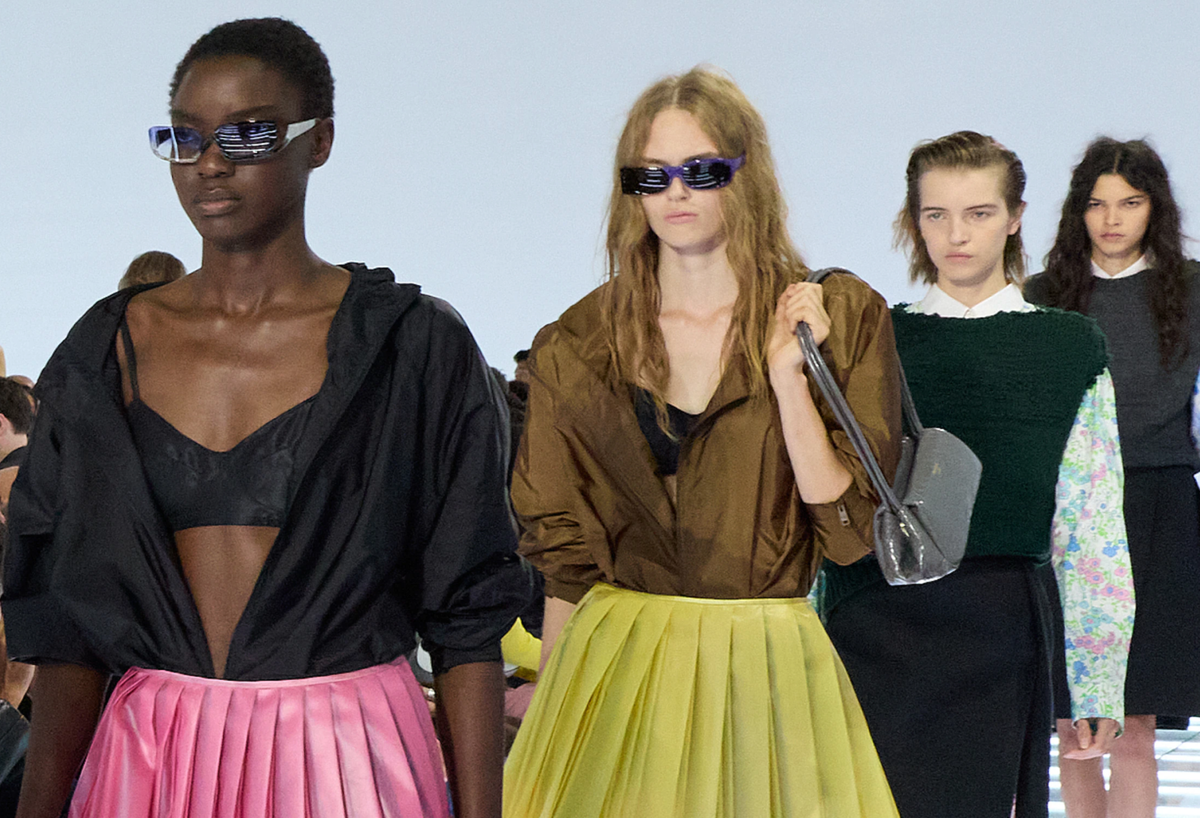
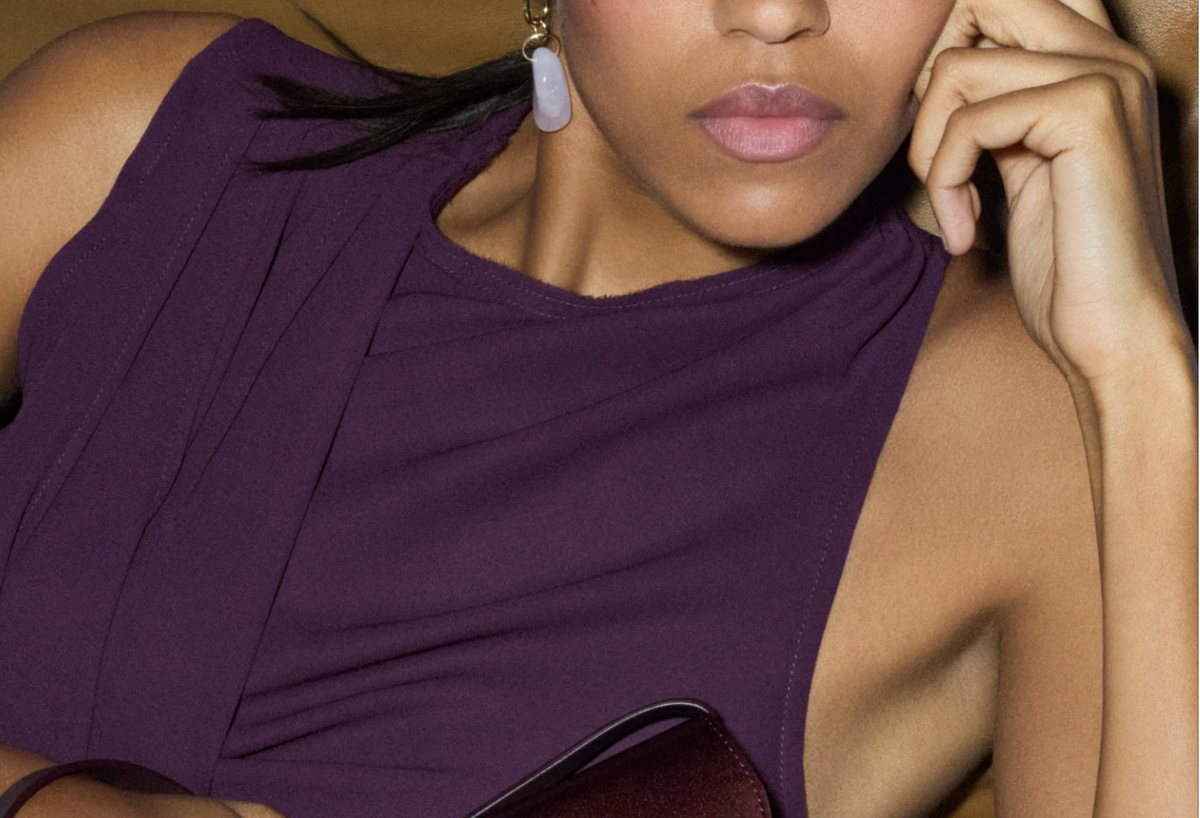
Colour appears in unmistakably Miuccia fashion: anise green, Pepto-Bismol pink, neon yellow and unfathomable shades of purple punctuate the collection as visual anchors. If one element particularly captured the audience's attention, however, it was Prada's asymmetric sunglasses. The frames combine two distinct silhouettes into a single object. Speaking to WWD, Simons summarised the approach through an apt analogy: "pasta pomodoro". The finest ingredients, the greatest simplicity, and the most refined technique, without unnecessary embellishment. At a moment defined by information overload, Prada suggests that novelty emerges not from invention, but from seeing familiar things differently.