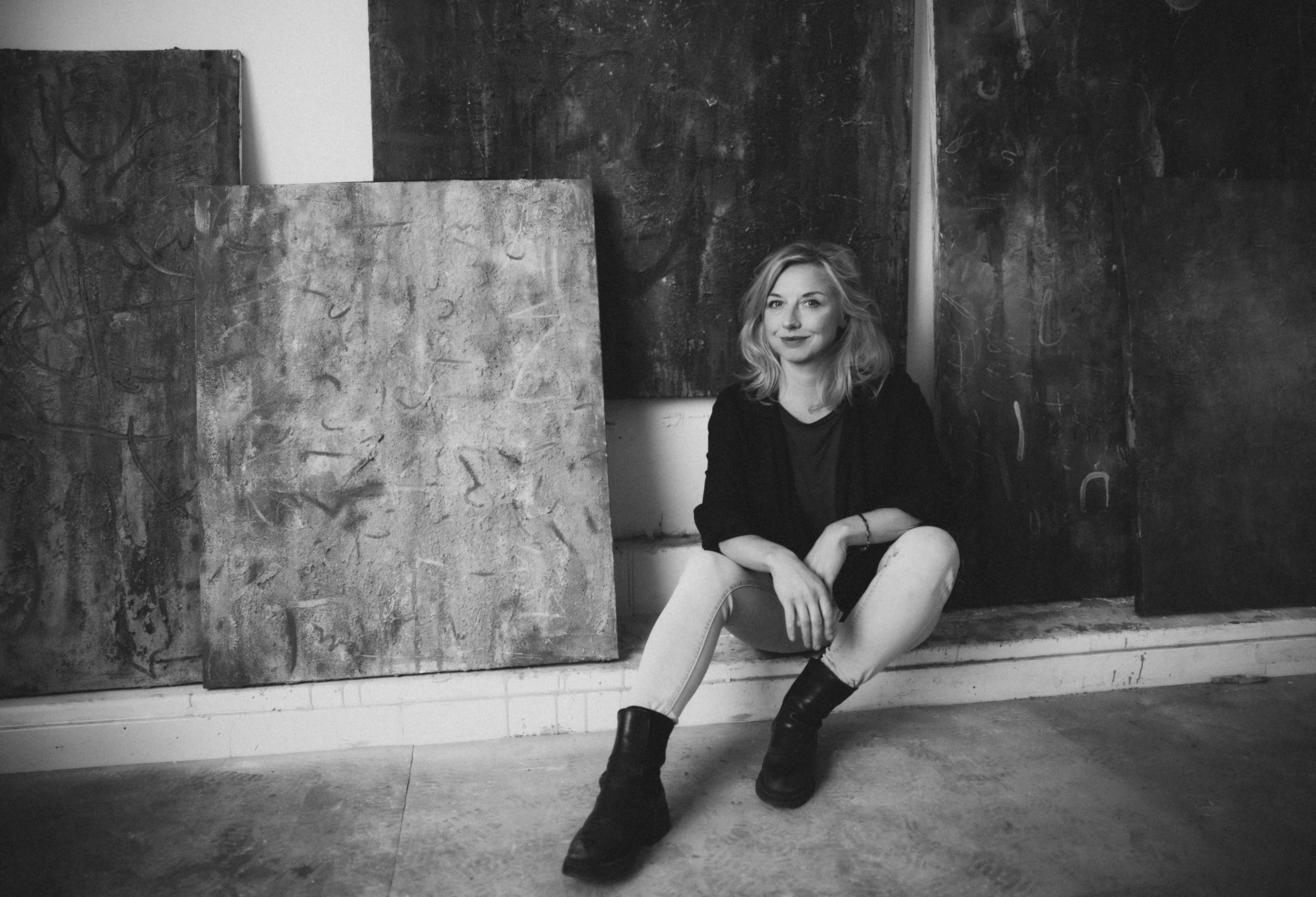
After leaving Germany and travelling through Andalusia and Morocco in a camper van, you eventually settled in Galicia. Would you say that journey influenced the way you understand artistic creation?
Yes, without a doubt. I spent all that time outdoors, immersed in nature and in extreme environments: the desert, arid landscapes, rugged coastlines. Stepping away from urban life and experiencing the cultures and landscapes of Southern Europe and North Africa broadened my perspective. For many years, I have observed textures and reflections and translated them into videos and photographs, which in turn inform my artistic practice. That practice has evolved from illustration and collage, through painting within defined formats, and ultimately into sculpture.
The Galician coastline appears repeatedly in your work. What have you found in the Atlantic that you did not encounter elsewhere?
In Galicia, I discovered a raw and mystical energy that has profoundly inspired and influenced me ever since. The immense force of the elements is felt here in an extraordinarily direct way. For me, the Costa da Morte is one of the most fascinating landscapes, especially when the sky turns black, the sun breaks through the clouds, and the colours and sea foam begin to shift. This constant variability, the powerful movement of the ocean, the mystical atmosphere and the shapes of the rocks have deeply shaped the aesthetic language of my work.
Your practice began with collage, moved through illustration and social critique, and eventually developed into a much more physical relationship with landscape and materials. What prompted that shift?
The loss of my mother, together with my travels, gradually redirected my practice towards a more direct engagement with the elements. That loss marked me profoundly and led me to reflect on matter and spirituality, as well as on rituals connected to water.
Fashion is often built around controlling fabric. Yet many of your works emerge from exposing textiles to the erosion of the elements. What have materials taught you once you stop trying to control them?
What is truly fascinating is the process itself. It is precisely there that things happen that I could never have anticipated. Those are the best moments, approaching unknown territory through experimentation. I allow myself to be guided by the behaviour of the materials and observe the relationships they establish with one another. They are an incredibly fertile source of inspiration; through their own essence, I discover new possibilities. The interplay between natural and industrial materials, earth and water, but also the remnants of post-industrial landscapes, is endlessly compelling to me.
I believe that, at the beginning of creative processes across all disciplines of the creative industries, something similar takes place in terms of idea generation and those first tentative steps, before the phase of control begins. The same is true in fashion. That is the stage of creation I choose to focus on, allowing myself to be guided by non-human elements.