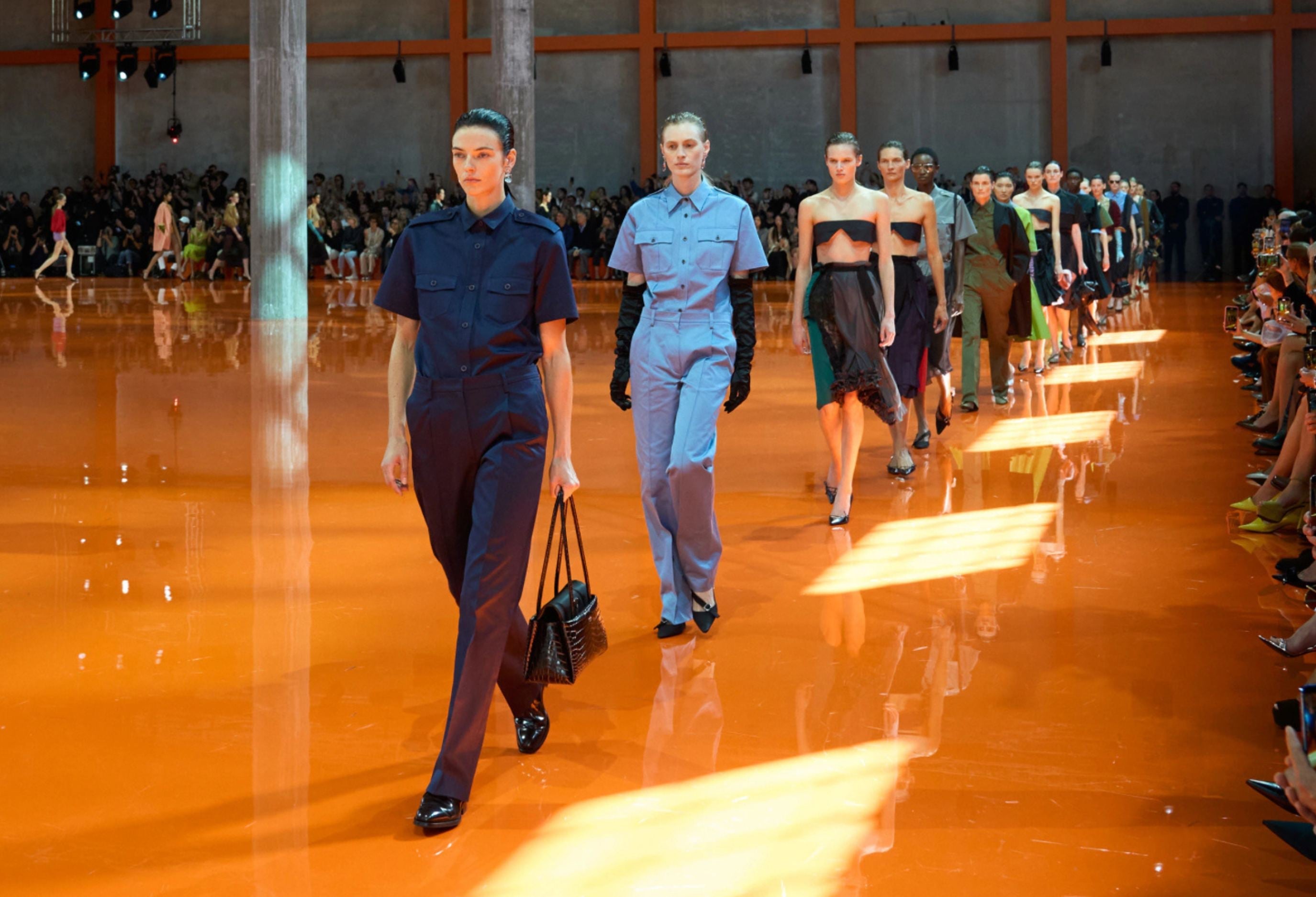
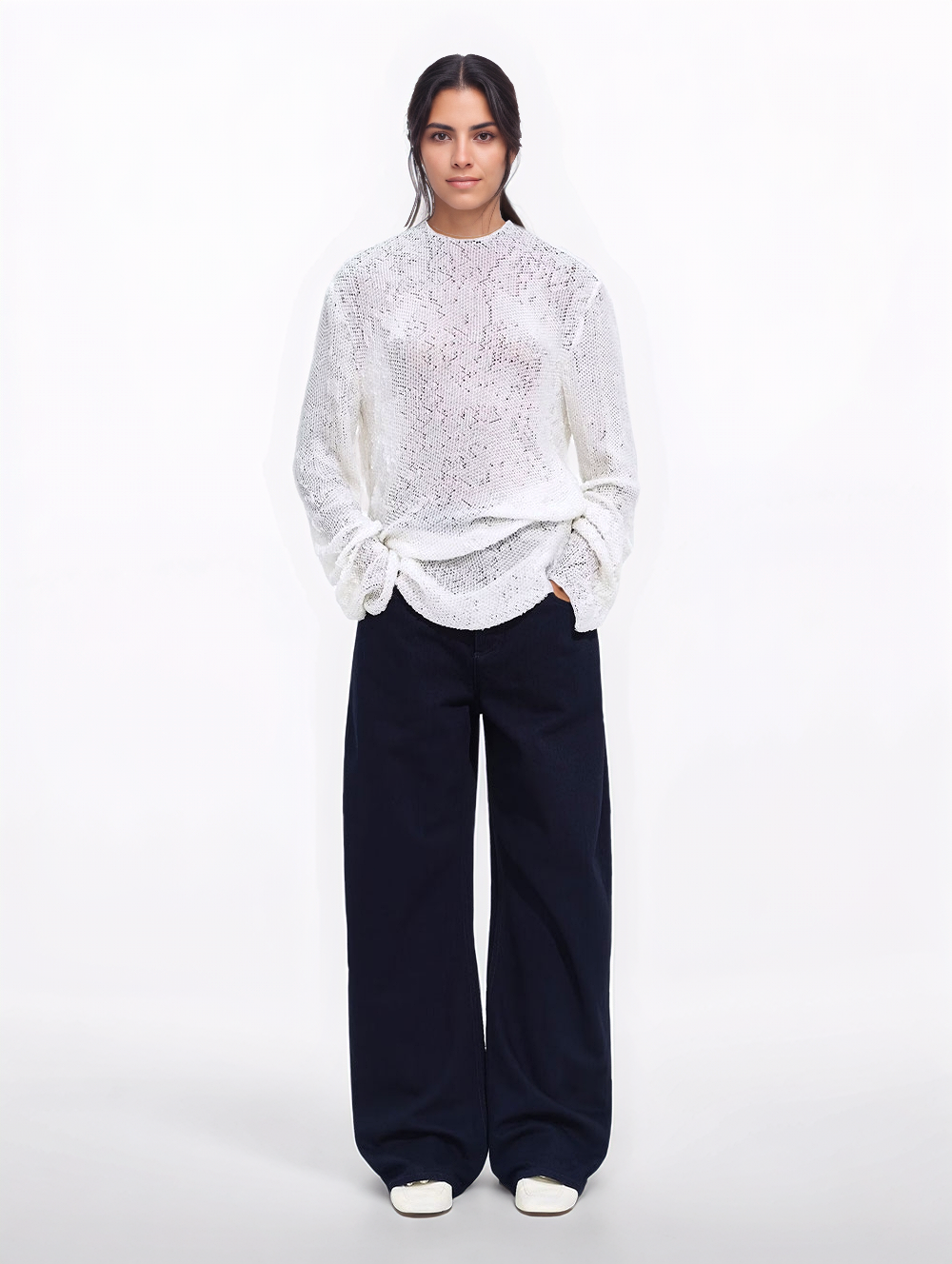
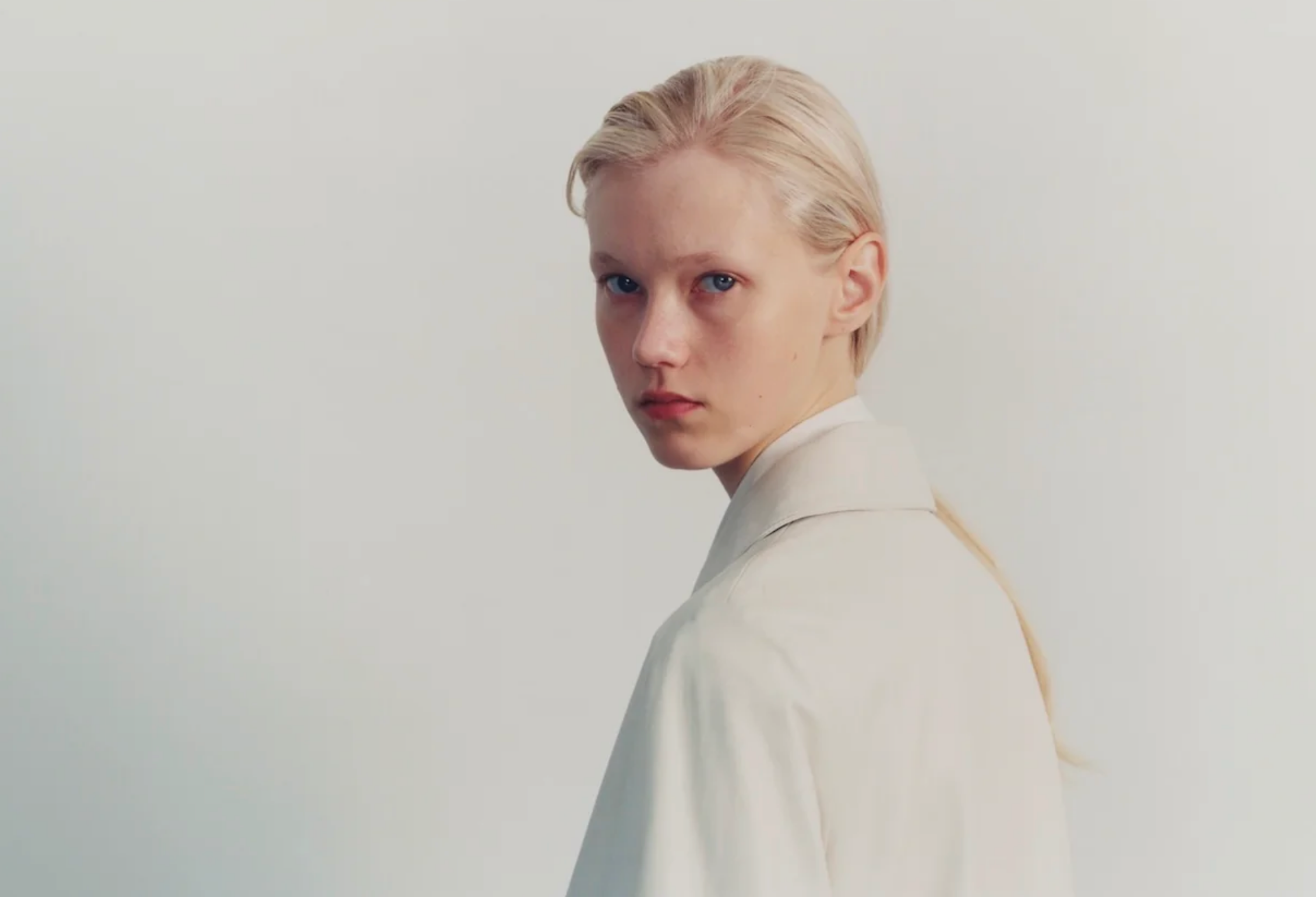
Simone Bellotti’s first show for Jil Sander was symbolic, even emotional for those loyal to the brand: it opened with Guinevere Van Seenus, a 1990s muse of Jil Sander and ultimate example of the house’s founding aesthetic. Wearing a fitted navy sweater and a white pencil skirt, the first look placed us firmly at Jil Sander’s origins, but with a more sportive energy. Bellotti did engage nostalgia, yes, but through it he built a wholly personal language grounded in tactile, human design.
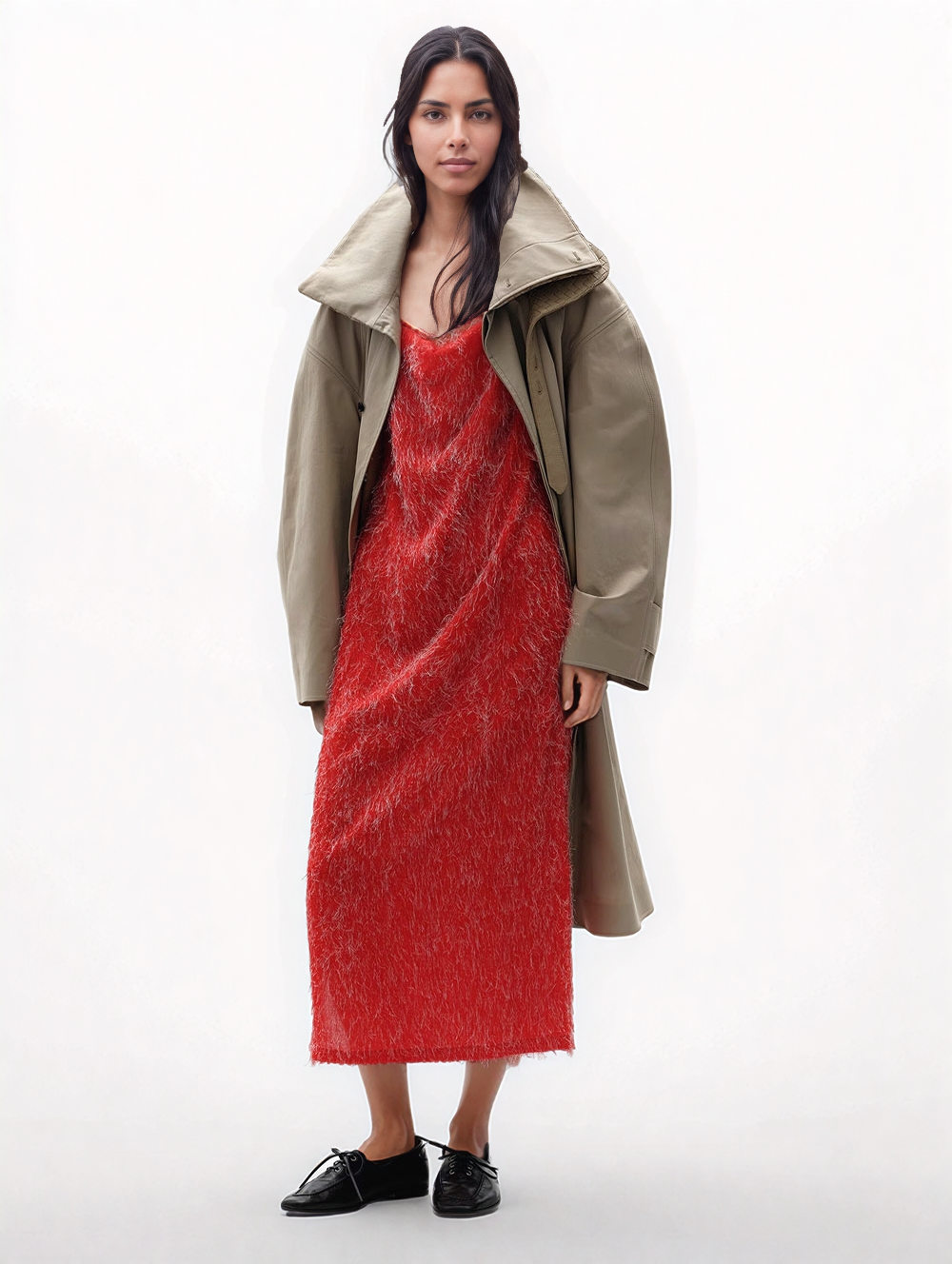
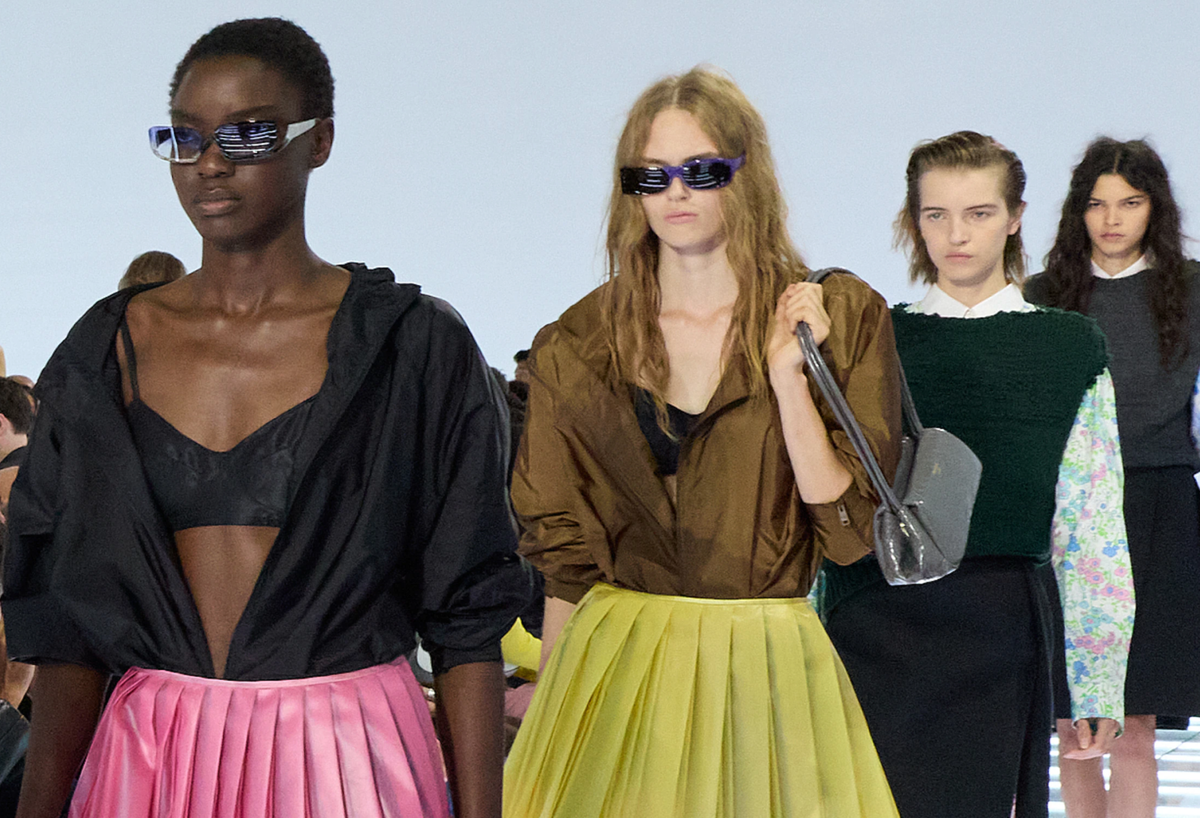
The collection played with unexpected cuts and intelligent textures: layered silks like sheets, floral plastic dresses over slips, compressed coats sculpting the torso, and a constant futuristic undertone. Between textile discipline and a sharper sensuality, skirts with hip slits, dresses with revealing cutouts, emerged a reflection on the body and intimacy.
The runway debut also marked the culmination of a path foreshadowed in July with Wanderlust, a musical and visual project filmed in Hamburg. There, Bellotti presented an EP by Bochum Welt, alongside a video exploring tension between order and chaos, rigor and freedom, concepts that mirror the brand’s DNA near its city of origin. With Wanderlust, the designer made clear that his vision for Jil Sander will be a cultural mosaic, interwoven with the emotions of music and imagery.
Chromatic highlights were clear and precise: Klein blue contrasted with reds, neon blush, and transparencies challenging minimal functionality. As the house itself clarified earlier this year: “Jil Sander is not a minimalist brand. It is a brand with substance.”
More than a simple relay after the Meier era, Bellotti pointed towards a Jil Sander where control gives way to experimentation and personal play. Minimalist? Yes, but more accurately: intentional.