Skip to content

OTTODISANPIETRO

Get our app ✨

Download

Cart

Your cart is empty

Select your gift wrapping

THE FASHION AWARDS OF 2025

Each year, the CFDA Fashion Awards and the British Fashion Awards act as mirrors of the fashion system. New York and London, parallel yet antithetical capitals in their approach to fashion, are two distinct geographies that use their galas to celebrate their cultural networks.

In today’s landscape, defined by creative shifts, rule-breaking, and a constant tension between industry and experimentation, both institutions serve as beacons of what is truly influential now. Moving between the American discipline of commerce and the British daring of creativity, these ceremonies exalt two parallel forces: industry and imagination.

We now look back at the 2025 awards and nominations that shaped the international fashion conversation.

THE FASHION AWARDS OF 2025

What Are the CFDA and the BFC?

The CFDA Fashion Awards and the British Fashion Awards, organized by the Council of Fashion Designers of America and the British Fashion Council respectively, operate as parallel reference points in the global fashion narrative. They originate from different yet comparable contexts, the fashion ecosystems of New York and London, and share the same purpose: to legitimize, highlight, and propel the talent shaping fashion at any given moment. In parallel, both organizations establish frameworks to define concepts such as innovationimpact, and vision within a system increasingly fluid between craftsmanship, technology, culture, and business.

Founded in 1962, the CFDA built its mission around the American industry. It champions business longevity, technical craft, and the ability to transform an aesthetic idea into product and community. Since 1981, it has awarded the annual CFDA Awards, which began as an industry-insider platform and evolved into a ceremony watched closely within the entertainment world. Even in its early days, the complexity of the sector was already visible: debates around competitiveness, tensions between performance and business, and even moments of protest, such as Geoffrey Beene’s refusal to accept his award.*

In the first televised CFDA Awards ceremony, organizers decided that all nominees would be declared winners to avoid broadcasting the disappointment of non-winners. American luxury pioneer Geoffrey Beene, one of the nominees, refused to participate, stating that knowing how to win, and how to lose, is part of true collegiality.

Over time, the CFDA expanded its scope to recognize a wider range of industry figures: journalists, emerging talent, and later scholarship recipients and leaders in social-impact and diversity initiatives. Since assuming leadership at Vogue USAnna Wintour has been a central figure in mentoring young designers through CFDA programs. The organization also manages the official New York Fashion Week calendar, consolidating its role as the institutional guardian of American fashion.

The British Fashion Council, founded in 1983, emerged with a different point of view. From the outset, London positioned itself as an almost antithetical force to New York’s high-business structure. The city has long embraced its reputation as a creative laboratory, where fashion operates as a cultural language for both Britain and the world. The BFC activates these synergies through London Fashion Week, which, despite its fluctuations, consistently supports designers with funding programs and a strong network of scholarships. Its vision prioritizes sustainability, structural diversity, and an experimental spirit that allows emerging designers to coexist with established names. It also organizes The Fashion Awards, a gala that celebrates creativity and impact.

In conclusion, the CFDA and the BFC are complementary institutions: one rewards commercial viability and business structure; the other celebrates experimentation, risk, and social influence. Different, yet essential in shaping the map on which each fashion season is drawn.

CFDA 2025 - The Winners

The 2025 CFDA Fashion Awards outline a clear picture of how the United States wishes to define itself in a year marked by change, transitions, and new sensibilities. Held at the American Museum of Natural History, the ceremony unfolded through notions of tradition, spectacle, and cultural diversity. The dress code, “American Black Tie,” invited guests to reinterpret forms of American elegance through a contemporary lens. Inside the Akeley Hall of African Mammals, the red carpet served as a prologue to the major celebration of American design. Host Teyana Taylor opened the night in Thom Browne, followed by Lily Allen in Colleen Allen, and Paloma Elsesser in Jonathan Simkhai. Guest appearances expanded the event’s energy with technical excellence, representation, and the presence of younger, emerging labels.

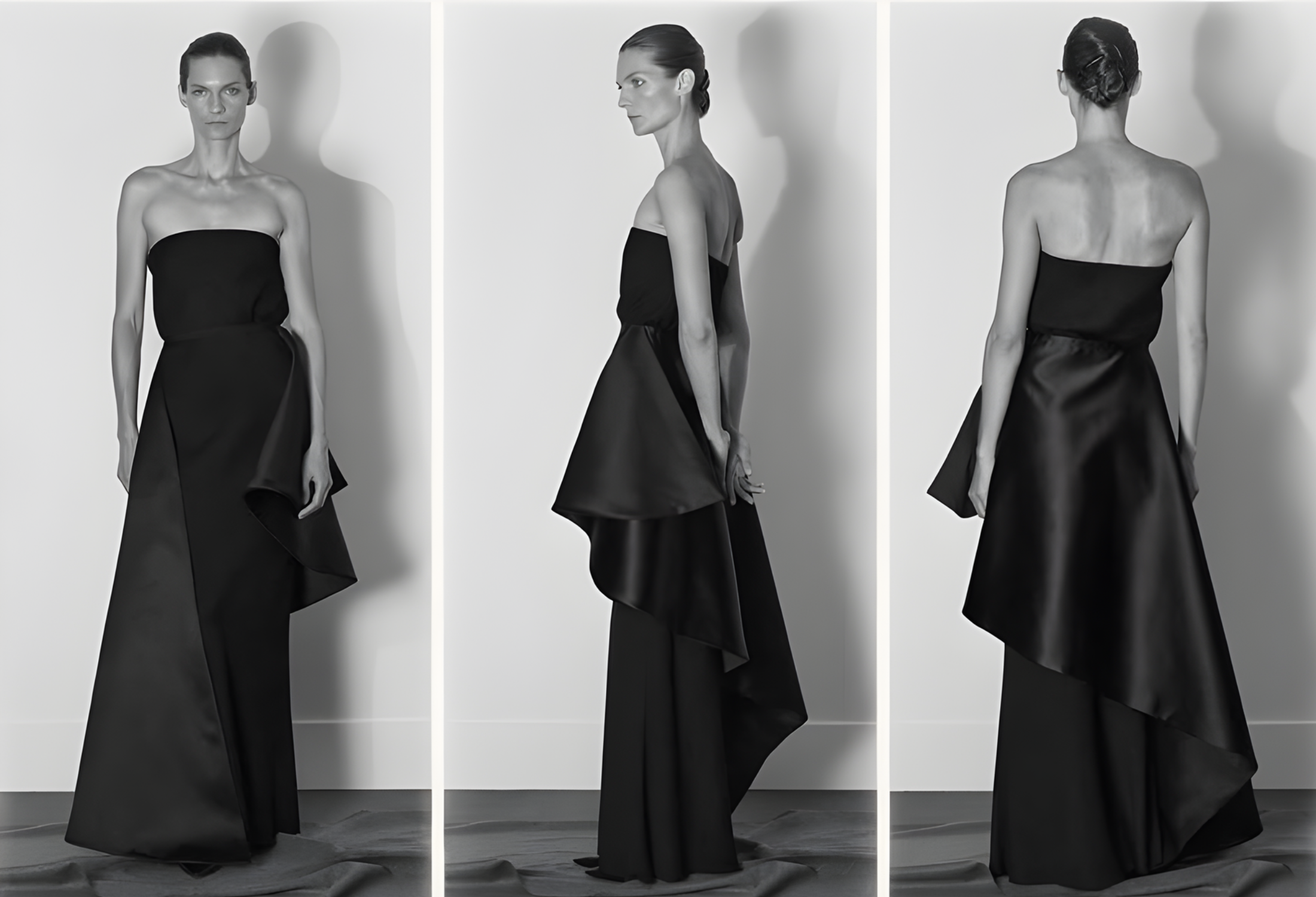
The recognition of The Row as Accessory Designer of the Year elevated one of the most awarded houses in CFDA history (2012, 2015, 2018, 2020, and 2023), while spotlighting one of the most influential pillars of American design: accessories. The award comes as no surprise, given the monumental success of the house’s leather goods, bags like the MargauxMarlo, or 90s have achieved global cult status. Pieter Mulier of Alaïa received the International Award, underscoring the world he has built and the renewed life he has brought to Monsieur Alaïa’s legacy.

Meanwhile, Ralph Lauren was named American Womenswear Designer of the Year, reaffirming a universe he has reignited and kept relevant for decades, the very quintessence of American identity-building through style. In parallel, Thom Browne received the title of American Menswear Designer of the Year, further cementing his mastery of tailoring beyond the theatrical.

New generations were represented through Ashlynn Park, winner of the Google Shopping American Emerging Designer of the Year, whose Japanese-informed technique has opened a new path for minimalism as something sensory and intimate. In the cultural sphere, A$AP Rocky received the Fashion Icon Award, closing the loop between music, style, and the construction of contemporary masculine identity. Additional honors were given to Donatella Versace (Positive Change Award) and Ralph Rucci (Lifetime Achievement Award), acknowledging established figures with lasting global impact and technical continuity.

BFA 2025 Awards - Nominees and Winners

Set to take place on December 1, the British Fashion Awards 2025 reaffirm London as the epicentre of experimental movement in fashion. In contrast to the American structure, the BFC positions creativity as both a cultural language and a business methodology. The Designer of the Year nominee list makes that vision clear: Rick Owens, Martine Rose, Willy Chavarria, Jonathan Anderson, Miuccia Prada, and Glenn Martens represent six ways of understanding creative risk.

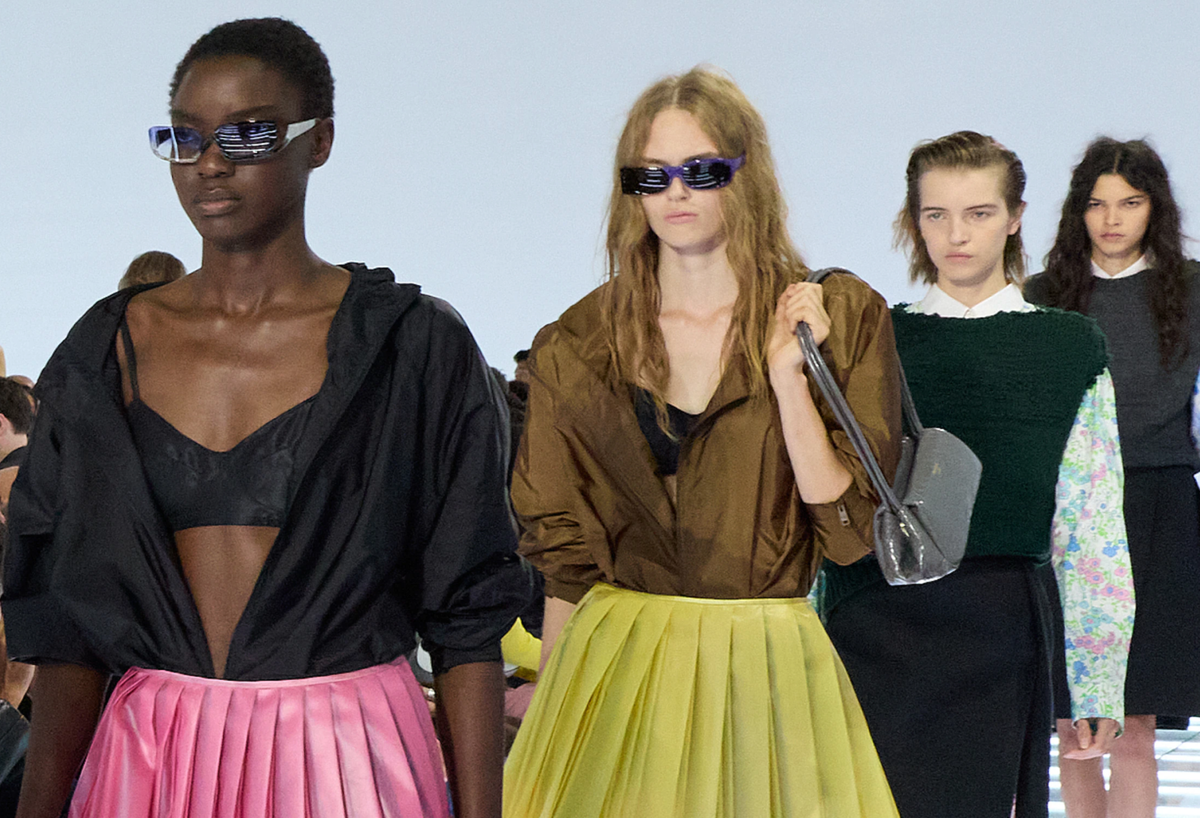
For Rick Owens, fashion is the exploration of the body through a poetic brutalism; Martine Rose expands streetwear into a more emotional dimension; Willy Chavarria interrogates the politics of masculinity; Jonathan Andersoncontinues to develop a sensory, intellectual design language that now operates between Dior and JW Anderson; and Miuccia Prada, through Miu Miu, builds new forms of youthful rebellion. And of course, Glenn Martens consolidates a digitized design language oscillating from Diesel’s street vocabulary to Margiela’s couture discipline. Together, they map global design as a field of sculpture, strategy, and historical rethinking.

In the British Womenswear Designer of the Year category, nominees include Simone Rocha (deepening her romantic vocabulary with each collection); Chopova Lowena (a hybrid energy between craftsmanship and post-digital aesthetics); Sarah Burton (now at Givenchy with her precise, almost surgical vision); KNWLS (reading the body as a space of dialogue and contradiction); and Erdem (who preserves British heritage with renewed modernity).

In menswear, the selection is equally emblematic: Kiko Kostadinov designs through the lens of engineering; Craig Green through the sociology of dressing; Nicholas Daley draws from community and historical memory; Labrum London projects contemporary diasporas; and Stefan Cooke and Wales Bonner now sustain two parallel lines of graphic and spiritual sophistication.

The Vanguard Award highlights generational strength, with Aaron Esh, Dilara Findikoglu, Feben, Steve O Smith, Tolu Cokery, and Torishéju representing a design ethos rooted in theatricality, social critique, and politics. In individual categories, Anok Yai was named Model of the Year 2025 after several consecutive nominations, thanks to her editorial command and ubiquitous presence across the industry. The Isabella Blow Award, celebrating enduring creative legacies, goes this year to Rei Kawakubo, Adrian Joffe, and Dickon Bowden, the minds behind the Dover Street Market concept. In parallel, Delphine Arnault received the prestigious Special Recognition Award, while the Outstanding Achievement Award honoured Brunello Cucinelli, a symbol of humanist luxury grounded in ethical enterprise.

With this, the British Fashion Awards 2025 reaffirm the essence of British creativity: fashion that thinks, questions, and continually dissolves the boundaries of design season after season.

Join the conversation in our socials